Layer conflation
Containment is not evidence preservation.
Containment Is Not Evidence Preservation
Incident response sequences detection, containment, eradication, and recovery, while digital forensics preserves and analyzes volatile and persistent artifacts with acquisition integrity and chain of custody.
“We isolated and reimaged the host, so the incident is contained and investigated.”
Let me stop you before that gets copied into the closure report.
Containment is not evidence preservation.
Isolation stops a host from talking.
Reimaging returns a host to service.
Resetting a password cuts one identity path.
Those can all be correct response actions.
None of them tells you how the attacker arrived.
What else they reached.
Whether persistence existed.
What data moved.
Whether the visible malware was the first thing on the host.
The usual layer collapse.
Incident response sequences detection, analysis, containment, eradication, recovery and review.
Digital forensics acquires, documents, analyzes, reconstructs and reports evidence.
They touch at the containment decision, because your next response action may destroy your next forensic opportunity.
NIST SP 800-61 Rev.
2 groups the work into four phases.
SANS presents six.
Neither model says “the endpoint agent isolated it” is also an investigation.
That would be like calling the fire extinguisher an insurance adjuster because both showed up after the alarm.
1. “But the Malware Is No Longer Running.”
Good.
That is a containment outcome.
It isn’t an account of your incident.
Short-term containment means immediate isolation.
Take the infected machine off your network.
Take the compromised server offline.
Block the malicious IP.
Where active exfiltration or lateral movement is confirmed, that is the default, because reducing harm now matters more than a prettier artifact set later.
The Ireland Health Service Executive did exactly that at national scale.
On discovery at 4 a.m. on 14 May 2021, it shut down IT systems nationwide during an active Conti ransomware event.
That is not evidence that teams should wait politely while ransomware spreads, so they can admire your process tree.
It is evidence that containment has a job.
But the job is bounded.
Stopping a process proves your process stopped.
It does not establish whether a loader preceded it.
Whether a compromised account reached another system.
Whether a persistence mechanism remains somewhere else.
CISA’s StopRansomware guidance makes this annoyingly concrete.
Eradication has to look for precursor malware.
Loaders such as Emotet, QakBot or Bumblebee, rather than deleting only the visible ransomware binary.
Removing the thing that made the noise is not the same as removing the thing that opened the door.
Containment limits the next harm. Investigation establishes the relevant past.
A dead process is evidence of neither complete scope nor complete eradication.
2. “But the Endpoint Agent Already Collected Logs.”
Logs are useful.
Preserve them.
They are not a substitute for the sources that did not write the answer down in the log format you happen to retain.
NIST SP 800-86 frames forensics as Collection, Examination, Analysis and Reporting.
The practical five-step expansion separates acquisition from chain-of-custody documentation, then proceeds through artifact analysis, timeline reconstruction and reporting.
That expansion matters, because a collected log is one item in a collection.
Not the word “Collection” made flesh.
Disk and memory analysis can examine recovered and deleted files.
Browser and application history.
Windows registry keys.
Email stores.
Process lists.
Network connections.
Code resident only in RAM.
A telemetry record may say that an alert fired.
It may not retain the deleted file, the loaded process, the mounted encrypted volume, or the metadata explaining your alert.
Timeline reconstruction isn’t sorting one log field and declaring the clock solved either.
It correlates file creation and modification times, registry last-write times, browser history and log entries across artifact types with different native clocks and formats.
log2timeline and Plaso exist because “timestamp” isn’t a single uncomplicated species of fact.
The forensic payoff can be embarrassingly small.
A Microsoft Word document sent to a Wichita television station on 16 February 2005 contained a “last modified by” field identifying Dennis.
That metadata connected BTK’s writings to a church council president.
The file had been deleted.
The metadata had not received the memo.
3. “But the Business Needs the Host Back Now.”
Then return it safely.
Nobody is proposing that production stay broken until every byte has received a personal interview.
The question is whether a defined capture can happen before the irreversible action.
A live acquisition captures memory contents, active connections, mounted encrypted volumes and running processes while your system is still running.
A reboot, shutdown or reimage can make those facts permanently unavailable.
Ross Ulbricht’s 1 October 2013 arrest is the clean example of why this is not ritual.
Agents copied key files from an open, logged-in laptop, because full-disk encryption meant a later dead-box image of the powered-off machine would have been unreadable.
The capture was targeted because the live state was the only available state.
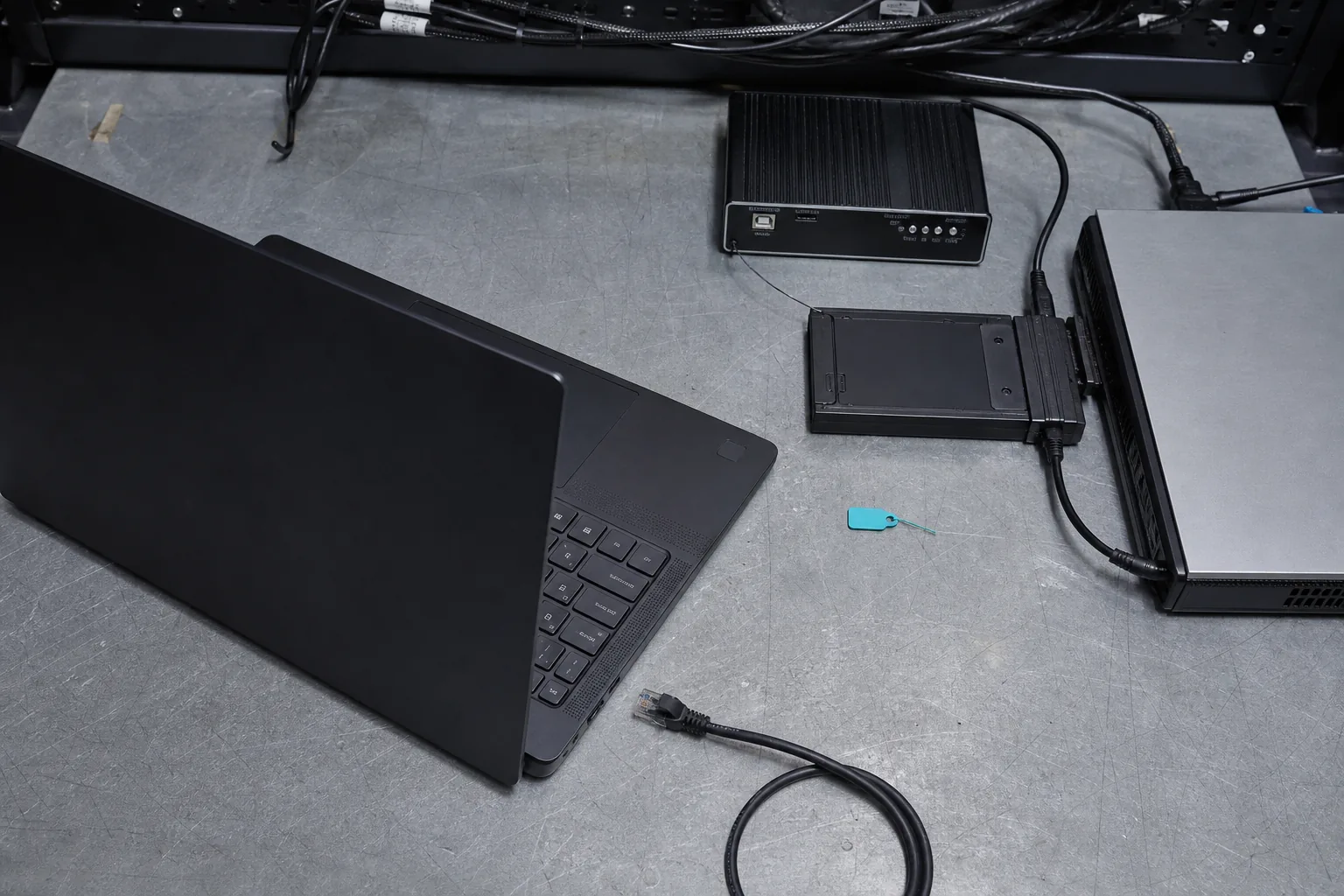
Conversely, a dead-box acquisition powers down your system and images storage through a write blocker.
More defensible for the storage copy, because the source is inert.
And it has already lost whatever existed only in memory.
In In re Boucher, an encrypted volume visible at the border on 17 December 2006 was unreadable after shutdown and re-examination on 29 December 2006.
Business urgency changes the scope of feasible preservation. It does not convert no preservation into preservation.
Capture the active connections, process data, memory and critical logs when safe.
Then isolate, rebuild or restore according to your incident’s actual risk.
4. “But a Full Disk Image Takes Too Long.”
Sometimes it does.
Which is why targeted triage exists.
A full forensic image is a sector-level duplicate.
It preserves allocated files, deleted and unallocated space, slack space and file-system metadata.
It supports later discovery of evidence nobody knew to seek during the first hour.
Targeted collection deliberately takes less.
A memory capture.
Event logs.
Browser history.
A user profile.
Particular file types.
Appropriate when the investigative question is narrow, the media is too large for the available time, or your system has to stay in production.
The tradeoff isn’t symmetric.
A full image can later be filtered into a triage subset.
A triage set cannot be expanded into deleted space, or a registry artifact that was never collected, after the source has been reimaged.
Calling both “an image” is how an evidence gap acquires a nice generic name.
So the pre-agreed order isn’t “always wait for a perfect disk image.”
It is: capture volatile evidence first where feasible, preserve the critical logs and defined artifacts, record what was not captured and why, then follow with a full image when circumstances allow.
That is a decision.
“We were in a hurry” is a memory of one.
5. “But Chain of Custody Is Only for Court Cases.”
No.
Court is where a bad custody record becomes expensive in public.
The underlying problem exists long before then.
RFC 3227 requires a record of where, when and by whom evidence was discovered and collected.
Where, when and by whom it was handled or examined. Who held custody during each period, and how it was stored.
When and how each transfer occurred.
That is the answer to a basic operational question.
Is the artifact being analyzed the artifact that was collected, and can you account for it all the way through?
A gap is not repaired by your analyst having good intentions, or an exceptionally confident slide deck.
Custody continuity becomes legally sufficient under rules that vary by jurisdiction.
The durable operational point does not vary.
Every interval needs an accountable custodian, and every recipient needs to confirm that what arrived matched what your record says was sent.
This serves internal response too.
A recorded handler, timestamp, storage location and transfer explain why a particular image, memory dump or log export can support a post-incident finding.
Without them you don’t have an investigation artifact.
You have a file named final-final-2 and a hope.
6. “But the Attacker Will Be Gone After the Password Reset.”
That compromised credential path may be gone.
Worth doing.
It is still not a conclusion about the host, your environment, or the original intrusion.
Incident-response parameters distinguish host containment from identity-layer containment for a reason.
Unit 42 reports one documented incident in which an attacker reached domain administrator access in under 40 minutes from initial compromise.
Its reporting also finds 66% of social-engineering-based intrusions targeted privileged accounts, while 36% of all analyzed incidents began with social engineering.
Dated evidence for conservative escalation.
Not a claim that every incident moves at that speed.
Where privileged compromise or lateral movement is confirmed or strongly suspected, resetting passwords or disabling an account tier can be the responsible containment action.
Do it.
But coordinate it with the investigation lead, because a reset can also end a live session and remove an opportunity to capture relevant state.
Then investigate the other paths.
The password does not explain your initial access.
It does not identify the affected systems.
It does not prove that a loader, service, scheduled task or other persistence mechanism did not survive somewhere else.
A credential reset is a control action.
Not a forensic verdict.
7. No, This Does Not Mean Delaying Containment for Perfect Evidence.
It doesn’t.
The decision is a speed-versus-information tradeoff.
Not a moral test of whether your team respects forensics.
Long-term containment can stabilize a situation while preserving time to map the intrusion.
Targeted access restrictions.
Patching the exploited vulnerability.
A clean parallel environment under closer monitoring.
Immediate isolation is correct when the harm of waiting exceeds the information gained.
The short-term and long-term labels describe the tradeoff.
Not bravery.
The failure isn’t choosing speed.
The failure is choosing it accidentally, because authority, evidence priorities and the order of operations were never assigned.
Pre-incident playbooks should identify your incident type, the escalation chain, the systems or account tiers to isolate, the evidence sources to pull, and the person authorized to approve destructive actions.
A team with that preparation can say: memory first if safe; then isolate; preserve the original read-only; hash the acquisition; begin the custody record; reimage after the agreed capture.
A team without it argues about who may pull the plug while the clock gets shorter.
That isn’t a case for paralysis.
It is a case for deciding before an attacker turns your coordination into a spectator sport.
8. What You Should Actually Do
Define containment authority and evidence priorities in every incident-type playbook. Specify who can isolate a host, reset credentials, take a service offline, approve a reimage, and make the call when active exfiltration or lateral movement makes immediate containment necessary.
For a live system, capture volatile evidence first when safe. Memory.
Active connections.
Running process data.
Mounted encrypted volumes.
The critical endpoint, application and event logs available to the case.
State whether the collection is a full forensic image or targeted triage, and state what it deliberately does not preserve.
Acquire storage through a write-blocked connection when a dead-box image is appropriate. Verify the copy against a hash of the original.
E01 evidence containers carry a bit-for-bit copy with CRC checksums and an MD5 hash; current accredited-lab practice commonly computes MD5 and SHA-256, or SHA-256 alone with MD5 as a legacy compatibility check.
Preserve the original media sealed and secured.
Conduct analysis on the copy.
Open the chain-of-custody record at acquisition, not during the retrospective.
Record collection, handling, storage, custodian, timestamp and every transfer under RFC 3227’s categories.
Hashing answers whether a copy matches.
Custody answers who had it.
Acquisition scope answers whether it contains the question’s answer.
None compensates for the other two.
Coordinate reimage and credential-reset actions with the investigation lead. Record the action, the time, the authorizing person, the evidence captured first, and the evidence knowingly sacrificed.
Then your post-incident review can examine an actual tradeoff, instead of reverse-engineering a shrug.
9. The Model Is Not Complicated.
Containment stops attacker activity or access paths.
Eradication removes the identified cause and persistence.
Recovery returns systems to secure operation under increased monitoring.
Forensics preserves and analyzes the artifacts that let your team explain each of those judgments.
Those activities overlap.
NIST’s containment, eradication and recovery may run in parallel across different systems; SANS teaches them as discrete steps.
The grouping isn’t the issue.
The distinction is.
Stopping attacker activity and preserving the facts of that activity are different objectives that sometimes conflict.
Imaging speeds, agent retention periods and the tools available this year are dated evidence.
The need to decide which facts vanish first is durable.
Isolate the host when it has to be isolated. Reset your credential when it has to be reset.
Reimage the system when it has to be rebuilt.
Just stop calling the resulting absence of malware an investigation.
Objections
- Live acquisition captures memory, active connections, mounted encrypted volumes, and running processes that a shutdown or reboot can destroy.
- A full forensic image preserves allocated files, deleted and unallocated space, slack space, and file-system metadata, while targeted triage cannot later be expanded into what was not collected.
- RFC 3227 custody records identify collection, handling, storage, each custodian, and every transfer as the evidence moves.
- Hashes verify that an acquired copy matches the original; SHA-256 is the more defensible integrity default, while MD5 remains a legacy compatibility check in this use case.
- Timeline reconstruction correlates timestamps from files, registries, browsers, and logs rather than merely sorting one timestamp field.
- Containment authority and evidence priorities must be decided in playbooks before an active incident forces a speed-versus-information tradeoff.
- Reimaging and credential resets can be correct response actions while eliminating artifacts needed to establish scope, persistence, and root cause.
What this does not say
This does not mean response teams should delay necessary containment for perfect evidence; it means they need a pre-agreed order that captures volatile evidence where feasible and records the tradeoff when they cannot.
Raised in review
- If the host is isolated, has the incident been investigated?
- No. Isolation is containment: it stops the affected host from continuing a network path. Investigation requires evidence that explains what occurred, including volatile memory, active connections, processes, persistent files, logs, and related artifacts. A host can be safely isolated and still lose the material needed to establish initial access, lateral movement, persistence, or the full scope of compromise.
- Why does a reboot lose evidence that a disk image can never recover?
- A reboot or shutdown removes evidence that exists only while the system is running, including memory contents, active network connections, mounted encrypted volumes, and running processes. A later dead-box image can preserve storage but cannot recreate that live state. In re Boucher illustrates the consequence: an encrypted volume visible on 17 December 2006 was unreadable after the laptop was powered down and re-examined on 29 December 2006.
- Why are endpoint-agent logs not enough for root cause?
- Endpoint-agent and event logs are one artifact source, not a complete reconstruction. Disk and memory analysis can also recover deleted files, browser and application history, registry keys, email stores, process data, network connections, and metadata. Timeline reconstruction correlates those sources with logs. A log can show that an event occurred without showing the live process state, deleted artifact, or persistence mechanism that explains why it occurred.
- What does a full forensic image preserve that triage collection does not?
- A full forensic image is a sector-level, bit-for-bit copy that includes allocated files, deleted and unallocated space, slack space, and file-system metadata. Targeted triage collects a defined subset such as a memory capture, browser history, user profile, or event logs. A full image can later be reduced to a subset, but a triage collection cannot be expanded after the source is reimaged, moved on, or powered off.
- What has to be recorded in a chain of custody?
- RFC 3227 requires a custody record to identify where, when, and by whom evidence was discovered and collected; where, when, and by whom it was handled or examined; who held custody during each interval; how it was stored; and when and how each transfer occurred. The record establishes continuity from collection onward. Its legal sufficiency beyond that floor varies by jurisdiction.
- What does a hash prove after an image is collected?
- A hash is a fixed-length fingerprint used to verify that an acquired image matches its known original. It supports acquisition integrity; it does not prove that the collection captured every relevant artifact or that custody remained continuous. SHA-256 is the more defensible integrity default because it has no known practical collision attack, while MD5 is commonly retained as a legacy compatibility check for comparing an examiner's copy with the original.
- Is chain of custody only relevant when a case goes to court?
- No. Chain of custody makes an investigation reproducible and accountable even when the audience is incident-response leadership rather than a court. It records who handled evidence, when, how it was stored, and what was transferred, so later reviewers can assess whether the analyzed artifact is the one collected. A gap can undermine confidence in otherwise sound imaging; court admissibility rules are additionally jurisdiction-dependent.
- Does resetting a password prove that the attacker is gone?
- No. A password reset can contain a compromised identity path, but eradication must also identify and remove the malware, entry condition, and persistence mechanisms involved. CISA's ransomware guidance specifically calls for checking precursor malware such as loaders, because removing only the visible ransomware payload can leave the delivery mechanism available for reinfection. Identity containment and host investigation answer different questions.
- When is immediate containment more important than collecting evidence first?
- Immediate containment is the default when active data exfiltration or lateral movement is confirmed rather than merely suspected. Isolating a host, taking a production server offline, or blocking a malicious IP then limits damage at once. The team records the evidence it could not obtain and the reason for the action. The choice is a documented speed-versus-information tradeoff, not proof that evidence no longer matters.
- How should containment authority be decided before an incident?
- An incident-type playbook assigns the escalation chain, the systems or account tiers to isolate, the log sources to pull, and the authority for destructive actions before detection occurs. It also states evidence priorities and the investigation lead who coordinates reimage and credential-reset decisions. This reduces decision latency during containment, when a team otherwise has to perform analysis and containment-strategy selection at the same time.
- Why does reimaging make timeline reconstruction harder?
- Reimaging replaces the source state before a forensic examiner can acquire and correlate its artifacts. Timeline reconstruction depends on timestamps from file creation and modification, registry last-write events, browser history, logs, and other recovered sources. Removing the original file-system metadata, deleted space, and local artifacts leaves a narrower account based on whatever was exported first. Logs alone may not expose contradictions that a cross-artifact timeline would reveal.
- Can a response team preserve evidence without delaying a critical recovery?
- Yes, when the playbook orders a feasible targeted collection before destructive action and records the tradeoff when it cannot. A live capture can preserve memory, processes, connections, and mounted encrypted volumes; a targeted collection can preserve critical logs or a defined artifact set when a full image is not feasible. It is not a substitute for a full image, but it is stronger than assuming an erased system can explain itself later.